|
Day Seven: Friday, June 15, 2007
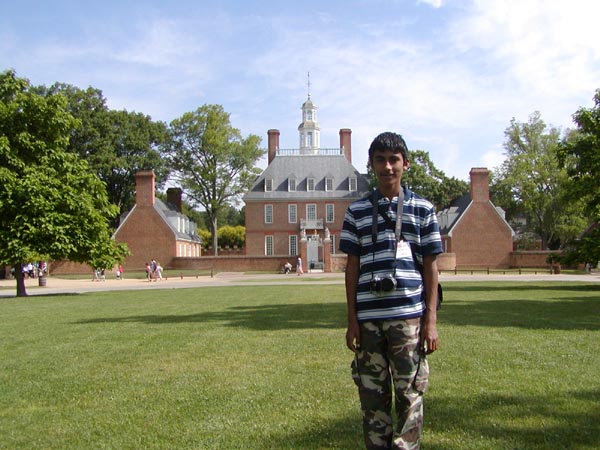
Today we hit rewind on our historic remote control and stepped back in time (we literally walked across a bridge with a timeline) to 1776 in Colonial Williamsburg. Usually, life in Colonial Williamsburg is set in 1773, but as the Fourth of July approaches, the city turns out for reenactments of the revolutionary activities that led to the war for American independence.
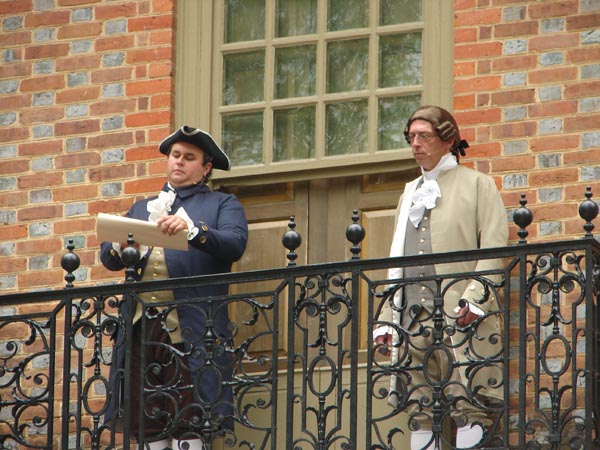
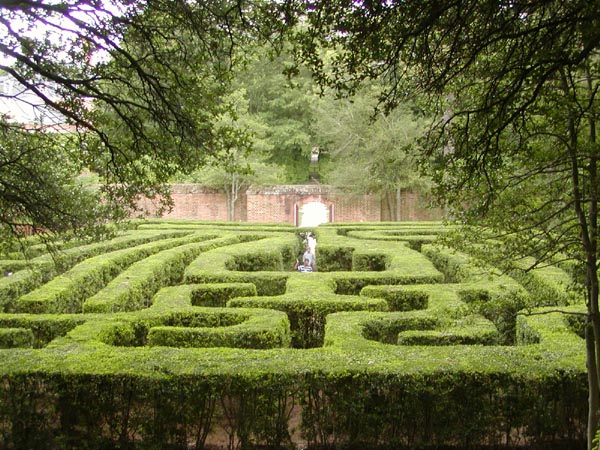
The first of these reenactments that we attended was an address by Virginia Governor Patrick Henry, followed by a lively discussion of the politics of the day and Mr. Henry's predictions about and opinions of "future" events. One woman asked the governor if he ever foresaw a day when a woman would have the right to vote, and he remarked on how nice it was that, even in a time of war, she was able to jest such. Someone raised the topic of forming an alliance with the French, for whom Patrick Henry expressed a personal contempt. Kala was about to roll up her sleeves and get into the discussion when she was dragged away by Victor, Andy, and Kismet, who had discovered the maze behind the Governor's Palace and who found that to be more tempting than a political discussion with a founding father who has been dead for more than 200 years.
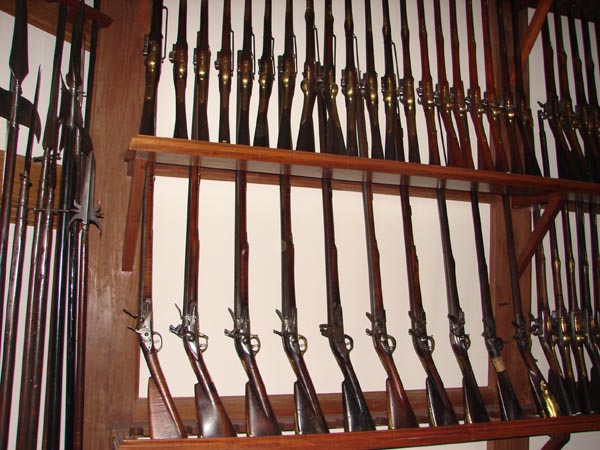
Once Victor had managed to extricate himself from the maze, we continued to the Williamsburg's powder magazine, where weapons and gunpowder had been stored during colonial times, and where colonial-era weapons may, these days, be viewed and appreciated with the help of a historical interpreter. We had seen colonial muskets and cannons, even heard them fired, but had never been so close to such a vast collection of colonial weaponry, including handguns and bayonets. The interpreter described in detail the gruesome, personal nature of warfare with bayonet. One had to be very close to one's enemy to reach him with the bayonet, and sometimes the weapon would become stuck in its victim's spine and require the aid of a soldier's foot to dislodge it.
All this talk of bloody combat naturally made us hungry (or perhaps it was just the time of day), so we stopped in at Chowning's Tavern for some light garden fare. It was not exactly colonial (if you have ever tasted authentic colonial-style food, you know that we got off easy this time), but it was tasty and satisfying. Kismet particularly enjoyed the corn chowder.
After lunch, we visited the brickyard, where we found a group of schoolkids performing a very important job for the brickmakers, that of mixing the clay with the stomping of their bare feet. We were invited to join them, but Kala has a thing about getting her feet dirty, and, well, the pit was deeper than Kismet, so we declined. It was interesting to see the process of mixing, molding, drying, and finally baking the clay into bricks. There is no permanent kiln at the brickyard. Rather, the dried bricks are built into a temporary kiln, and the fire which is started inside fires the very bricks that compose the kiln itself. The kiln is then dismantled, and the bricks are sold, leaving room to build another kiln out of the next set of dried, ready-to-be-fired bricks. It is a very efficient process.
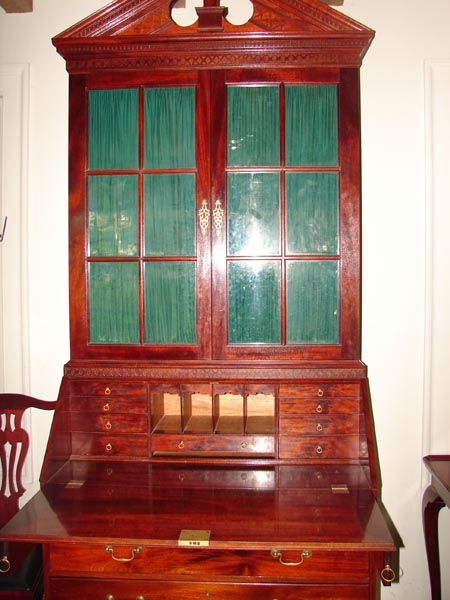
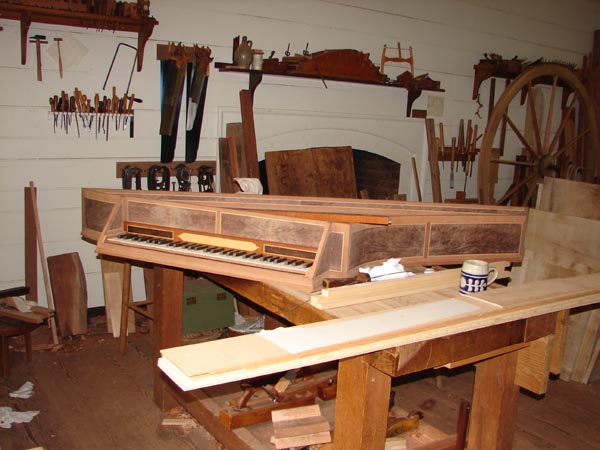
At the cabinetmaker's shop, we engaged in conversation about the making and selling of furniture that replicates the style of colonial pieces. The cabinetmakers in Williamsburg work from colonial designs, crafting beautful pieces of decorative art with the same tools used in the 18th century. In addition to furniture crafters, the shop also features a craftsman dedicated to the building of harpsichords. When a woman in another touring group asked, "What if there is no demand for harpsichords?" Andy piped up with, "There's always a demand for harpsichords!" The historical woodworker said that Andy had taken the words from his mouth and asked where he had been when he needed him earlier.
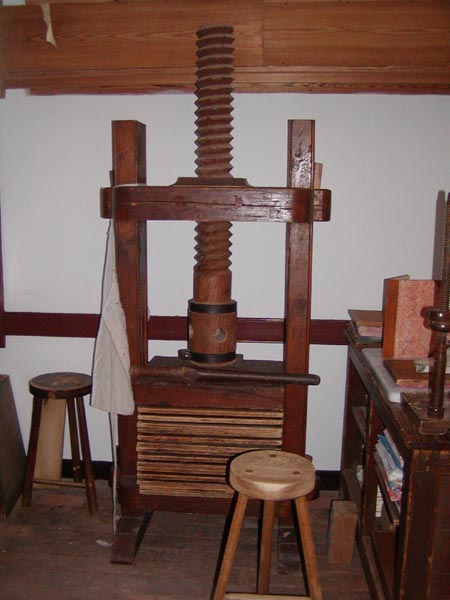
From there, we went to the bindery to see how books were made in the 18th century. More interesting than the actual process of making books were the criteria for deciding which books to make. To our surprise we found that bibles were very unprofitable and therefore very unpopular books for printers. Since church attendance was mandated by the state, it might appear that people had been very devout when, in reality, many were simply avoiding the beatings (and eventual hangings) that awaited the habitually truant parishoners. So, many folks felt no need to read the bible, much less own one, unless they happened to inherit one from a family member. Much more in demand from the bindery were blank ledgers in which people would keep their financial records.
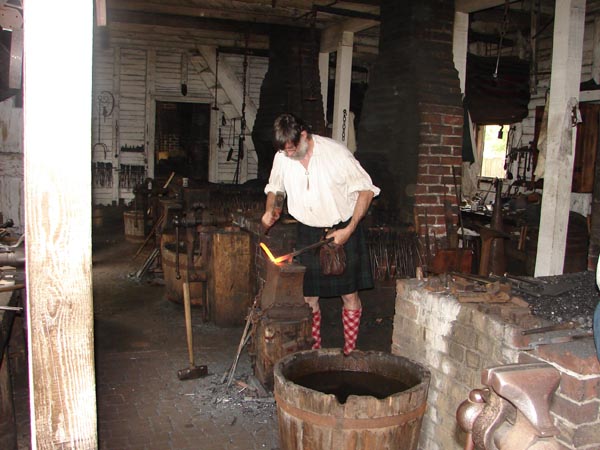
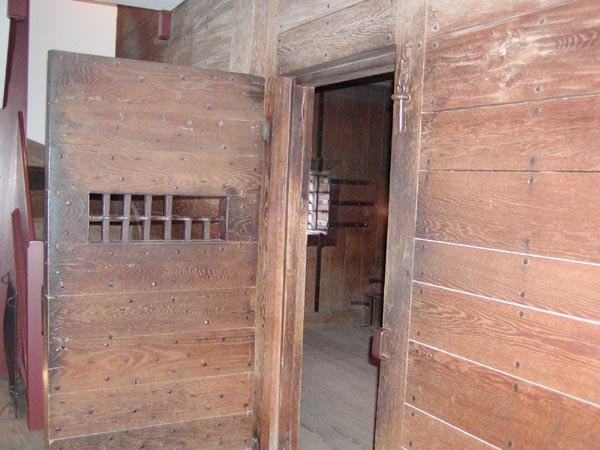
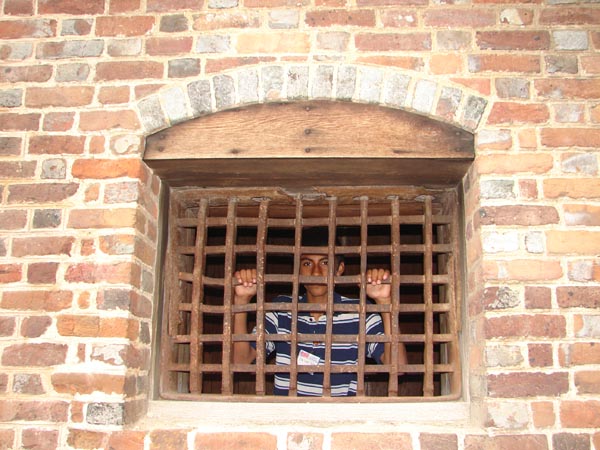
Next, Kala and Kismet sat out the visit to the blacksmith, where Andy and Victor learned about the craft of hammering super-heated metal into tools such as axe heads and nails. Then it was Andy's turn to sit with Kismet, as Victor and Kala visited the Public Gaol (jail). In addition to being the residence of the jailor and his family, the jailhouse served as the holding place for female criminals and the mentally ill. Those inmates were kept in cells on the second floor, right next to the jailor's children's quarters! Downstairs, the cells which housed the male inmates were hot, dark, and not at all well ventilated. One is loathe to imagine the rank odor produced by the overcrowding of these cells during the sultry southern summers, and wonders how long it took for the stench to fade after the facilities were retired from use.
After dinner and a brief rest, Victor and Kala ventured back out into the night (ok, the sun was barely beginning to set) for a lantern-lit ghost tour of Williamsburg. Andy stayed home with Kismet, as it would soon be past her bedtime (and as she seems to have a tendency to be mildly disruptive on guided tours). This particular tour led us onto the campus of the College of William and Mary, which was full of stories of hauntings dating back to the time of the Revolution. As we walked the streets of Williamsburg, our tour guide spun yarn after yarn about citizens who had met untimely demises and whose spirits roamed the houses looking for some solace which had eluded them in life. As we paused to hear a spooky tale beside the Bruton Parish church, some of us heard the organ begin to play. Who was playing the church organ at 9:45pm, when the lights had long been doused and not a soul was in sight through the leaden glass panes of the ancient holy place?
The creepy tour ended at around 10:00, and the night was quite dark and spooky by the time we walked back in search of our car. While Victor was checking the surrounding windows for signs of the paranormal, Kala was concerned about possible assailants of a more earthly nature. We were both on the lookout for the bogeyman, just on different existential planes. Tomorrow should be a much lighter day: We've got a wedding to attend!
|

|